Toll Free Verification
The Toll-Free Verification process is essential for businesses looking to utilize toll-free numbers for sending SMS messages. This procedure ensures that businesses adhere to compliance standards and maintain the integrity of the messaging ecosystem. This article outlines the necessary information required to complete the Toll-Free Verification process effectively.
Required Data for Toll-Free Verification
To initiate the Toll-Free Verification process, Carrick Health requires the following information:
Business Name: Provide the registered name of your business.
Business Website: Share the official website of your business. If a traditional website is unavailable, social media links (e.g., Facebook, Instagram, Twitter) may be submitted, provided they are set to public for review.
Business Address: Include the complete physical address of your business, including street, city, state, and zip code.
Business Contact: Provide the first and last name, email address, and phone number of a contact person at your business. Note that this information is not used for customer contact during verification.
Business Registration Number (EIN): Submit the Employer Identification Number or other business registration number assigned to your business. In Canada, a provincial business number or a Canadian Business Number (CBN) is acceptable.
Expected Message Volume: Estimate the monthly message volume for your submission. Choose the closest value from the following options: 10; 100; 1,000; 10,000; 100,000; 250,000; 500,000; 750,000; 1,000,000; 5,000,000; 10,000,000+. If you anticipate an increase in message volume within the next six months, please provide a value that reflects that growth.
Description of the Use Case / Summary: Provide a detailed description of the use case, including the type of messages that will be sent to the end user. The more information provided, the better.
Sample Message Content: Share a sample message that accurately represents the content to be sent to the end user, aligning with the provided use case.
Opt-in Description: Describe how consumers/subscribers opt into receiving text messages from your business. Include detailed information about the opt-in process, such as keywords, signage, online forms, or point-of-sale interactions. This description should be clear and provide a step-by-step explanation of how customers give consent to receive SMS messages.
Proof of Opt-in: If applicable, provide URLs of hosted images or screenshots that illustrate the opt-in process, clearly displaying the consent given by the subscriber.
Understanding Messaging Consent
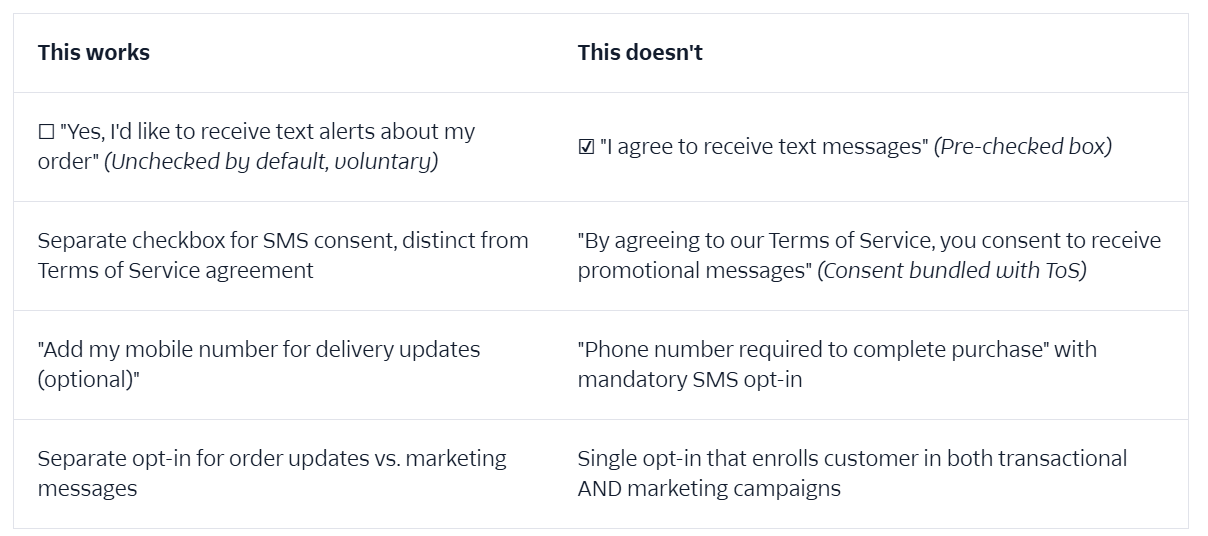
When conducting any form of messaging as a business, it is imperative to collect clear and direct consent from intended recipients before sending any messages. Additionally, it must be evident that recipients can opt-out from receiving messages at any time.
The following chart will assist you in properly collecting consent when messaging: